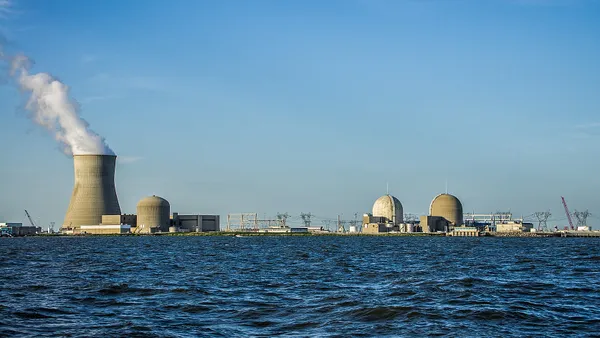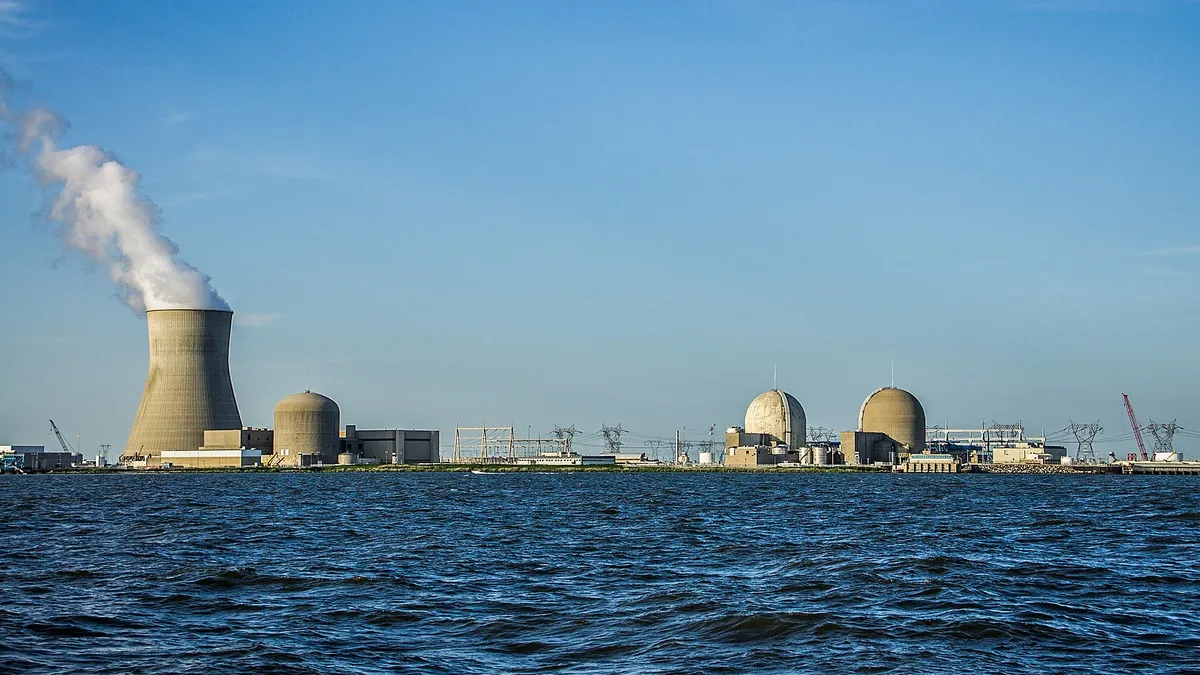
PSEG Power and Constellation Energy are planning a 200-MW uprate at their jointly owned Salem nuclear power plant in southern New Jersey, according to an earnings presentation by Public Service Enterprise Group, PSEG Power’s parent company.
Salem’s current installed capacity is 2,280 MW. PSEG Power would have a 112-MW share of the uprate and Constellation would own the remainder, which would support a recently announced nuclear-focused power purchase agreement with Google.
PSEG Power’s roughly 3,760-MW nuclear fleet ran at a 95.5% capacity factor in the third quarter, up from 92.4% in the same period last year, according to the presentation.
However, there has been a snag at the Salem plant, PSEG said Monday in its quarterly filing with the U.S. Securities and Exchange Commission.
During a scheduled refueling outage at Salem 1, a visual inspection last month revealed that the thermal shield inside the reactor vessel is degraded, according to the filing.
“We have initiated further testing, which is ongoing and is expected to extend the refueling outage,” PSEG said. “The impact of the outage on Salem 1 will depend on the timing and results of the inspection and necessary repairs.”
Meanwhile, PSEG continues to explore potential deals with data center developers centered around PSEG Power’s roughly 3.8-GW nuclear fleet, according to Ralph LaRossa, PSEG chair, president and CEO.
“PSEG Power is continuing to develop terms with large load entities for contracting arrangements involving existing nuclear production, future nuclear upgrades and other generation opportunities, similar to recently announced power purchase agreements in the PJM region and specifically in New Jersey,” he said during the earnings call.
FERC’s recent decision to reject key portions of the PJM Interconnection proposed plan for interconnection data centers and other large loads “reinforces that the focus has shifted to the states to address retail curtailment and cost issues associated with large load customers,” LaRossa said.
Public Service Electric and Gas Co., a PSEG utility, is working with the administration of New Jersey Gov. Mikie Sherrill, D, and the state’s utility regulators to limit electric cost increases for consumers and consider new utility regulatory models, according to LaRossa.
PSE&G, for example, plans to ask the New Jersey Board of Public Utilities to approve a plan for recovering the costs for investments made since its last distribution rate case, LaRossa said.
“Our filing … is all about staying aligned with the governor's goals to keep rates flat for as long as possible,” he said. The utility expects to file the proposal by the end of the year, PSEG said in its SEC filing.
Meanwhile, the BPU’s study on modernizing New Jersey's electric utility business model is now in its second phase, LaRossa noted.
“This initiative is focusing on cost discipline, financing modernization, targeted incentives and shared savings and staged performance-based ratemaking,” he said.
Those and other options mentioned in the Phase 1 report, such as multi-year rate plans, performance-based rates, performance incentive metrics, earnings sharing mechanisms, decoupling and shared saving mechanisms, provide “constructive paths to strengthen the connection between customer value, cost accountability and timely recovery of prudent investment,” LaRossa said.
PSE&G may have opportunities to invest in solar and grid readiness for distributed resources, but the extent of it could hinge on the state allowing utilities to own generating assets, according to LaRossa.
“I think the policy is not yet certain here in New Jersey as to whether or not it will move in a regulated direction or stay solely competitive,” he said.
On the financial front, PSEG’s third-quarter income fell to $376 million, or 76 cents/share, down from $622 million, or $1.25/share a year ago, mainly on mark-to-market losses at PSEG Power, the Newark, New Jersey-based company said in its SEC filing.
Third-quarter revenue slipped to $3 billion from $3.2 billion in the same period last year.