Dive Brief:
- The largest offshore wind farm in the U.S. began delivering power to the grid on Monday, according to its developer Dominion Energy. The 2.6-GW Coastal Virginia Offshore Wind project is expected to be complete in early 2027, barring additional delays, including those stemming from actions by the Trump administration, which has targeted offshore wind with legal, regulatory and financial tools over the past year.
- During a Feb. 23 earnings call, Dominion Energy Chair, President and CEO Bob Blue said it “doesn’t make sense” for the Trump administration to attempt to further delay the project as it did with a stop work order in December. The project will deliver power to “our customers who are leading the AI race, who are building ships for the Navy,” Blue said.
- Grayson Holmes, a senior attorney with the Southern Environmental Law Center, told Utility Dive in an interview that he also believes the project has enough bipartisan support to complete on time. However, Holmes noted that CVOW faces barriers from the PJM Interconnection to how much capacity it can deliver to the grid without transmission upgrades.
Dive Insight:
Blue was asked about the project’s likely reduced energy deliverability during the Feb. earnings call, and said the company “assumed 50% deliverability for this rider, and we'll update it if that assumption … needs to be adjusted.”
“We ask PJM to do an interim deliverability study to determine if there are going to be any limits on the project's ability to deliver its full output,” Blue said, noting there are some network upgrades that “may not be done when CVOW is finished. But we'll continue to work through making sure the project can deliver as much as safely as possible.”
Holmes said that CVOW’s first delivery of power to the grid is “obviously a pretty good milestone both for Virginia, and the country in general.”
“All the infrastructure that's built up around it, all the jobs that are being created, the supply chains that are being supported in the Hampton Roads area — it's setting Virginia up very well to be a big economic powerhouse on offshore wind going forward,” he said.
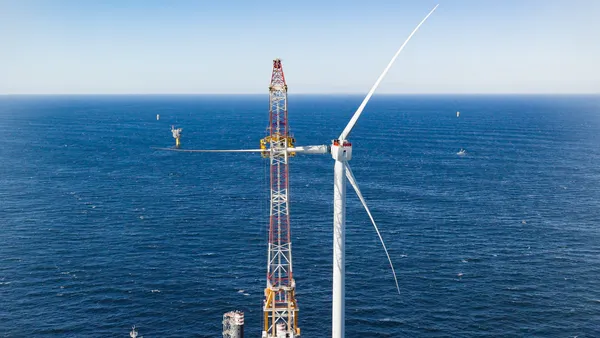
CVOW “will continue delivering more power to the grid as additional turbines are installed on the way to full completion early next year,” Dominion Energy spokesperson Jeremy Slayton said in an email. Power is currently being delivered by a single Siemens Gamesa turbine capable of generating up to 14.7 MW.
Although the Trump administration’s stop work order was successful in delaying CVOW and the four other offshore wind projects under construction at the time, Holmes noted that after federal judges ruled in favor of resumed construction, the Department of Justice let its deadline pass to challenge the injunction blocking its stop work order against Ørsted’s 700-MW Revolution Wind — which began delivering power to the grid March 13.
“I don't think the deadline is quite past for CVOW yet, but given what happened in the other case, I would suspect that we probably are on good footing right now,” Holmes said. “That's not to say they couldn't do something else. But I think I feel like at this point there's enough political momentum from all the other stakeholders, that we should be okay.”
During the earnings call, Blue said the company “[continues] to believe it just makes sense for this project to be allowed to continue. Slowing it down, as was demonstrated with the last stop work order, adds costs, and adding costs and delays in the data center capital of the world – we think doesn't make sense.”