
The race to lead in artificial intelligence (AI) is rapidly becoming a race to secure grid capacity.
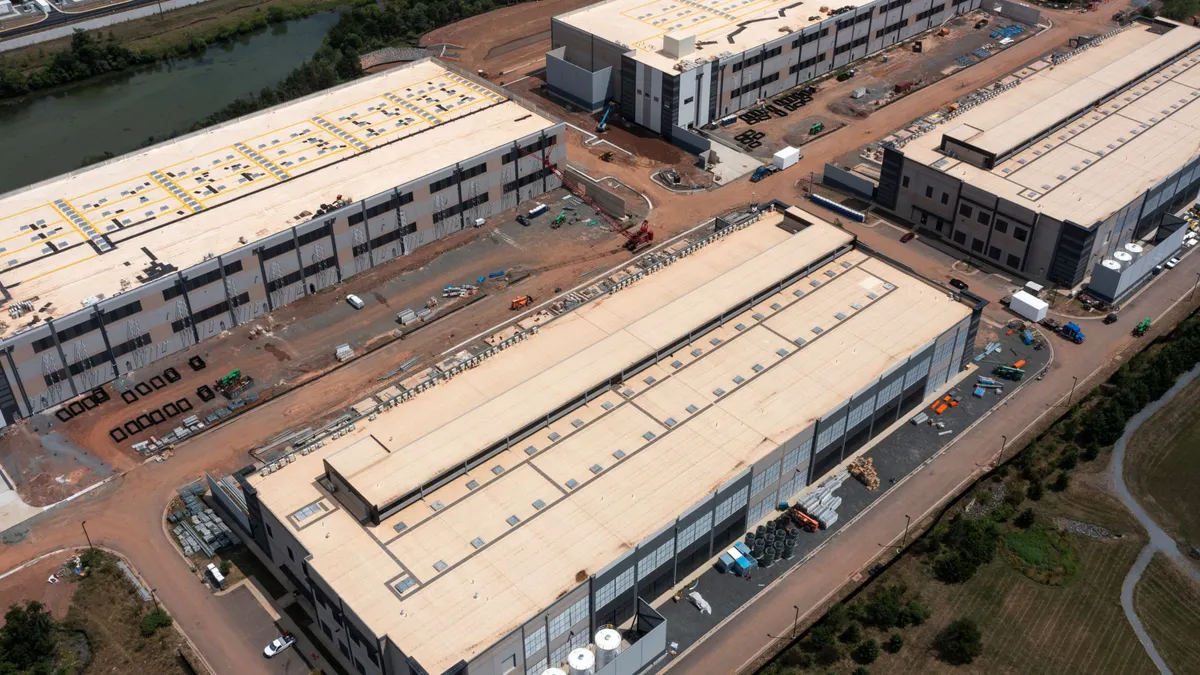
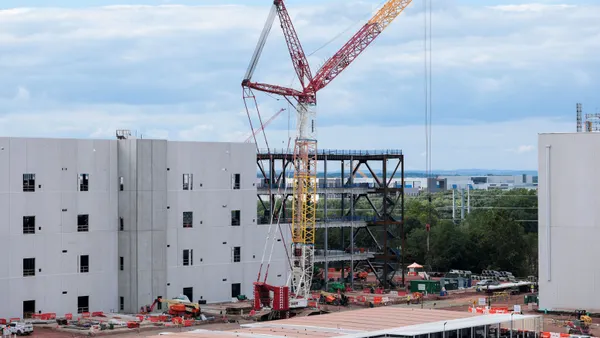
Across North America, technology companies are investing billions in hyperscale data centers, manufacturers are expanding domestic production and electrification is accelerating across transportation, buildings and industry. Together, these trends are driving a new era of large-scale load growth unlike anything utilities have experienced in decades.
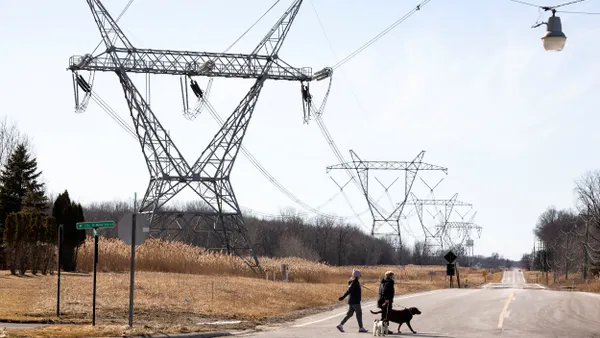
Yet demand growth is only part of the challenge. Increasingly, transmission capacity, interconnection timelines and grid readiness are becoming the factors that determine where and when new investments move forward. As utilities, independent system operators (ISOs) and regulators work to serve a new generation of large-load customers, they must do so while navigating unprecedented uncertainty about future demand and growing pressure to accelerate infrastructure development. This is why the conversation around AI has become much larger than data centers. It has become a conversation about planning.
The grid was already under pressure
AI is arriving at a time when utilities are already managing one of the most complex operating environments in their history. Long before AI became a boardroom priority, utility leaders were balancing electrification, renewable integration, infrastructure modernization and resilience investments. At the same time, regulators, policymakers and customers were asking utilities to make the grid more reliable, more resilient, cleaner and more affordable, all while supporting economic growth.
The impacts of these trends are already visible. In its 2025 Long-Term Reliability Assessment, the North American Electric Reliability Corporation (NERC) projected 224 GW of summer peak demand growth over the next decade, identifying data centers and other large-load customers as key drivers of that increase.¹ Against this backdrop, AI is not creating an entirely new challenge. It is accelerating existing ones and exposing constraints that were already emerging across planning and interconnection processes.
Interconnection queues are becoming an economic issue
As demand accelerates, one issue has moved to the forefront of industry discussions: interconnection.
Utilities and grid operators are processing growing volumes of requests from generation developers, storage providers, data center operators and industrial customers seeking access to the grid. At the same time, transmission systems are often being asked to support growth levels that were never anticipated when much of the infrastructure was originally planned and built.
What was once viewed primarily as a technical challenge increasingly has economic consequences. For hyperscale data centers, advanced manufacturers and other large-load customers, access to reliable power can directly influence investment decisions. In many cases, interconnection and infrastructure timelines are becoming as important as land availability, workforce considerations, or access to capital. As a result, grid readiness is emerging as a competitive advantage for regions seeking to attract investment and economic development.
The challenge for planners is that these decisions often must be made years before new demand materializes. A single data center campus can add hundreds of megawatts of load in one location. Several projects arriving within the same region can fundamentally alter infrastructure priorities and investment requirements. The question is no longer simply whether demand will grow. The question is where, when and how quickly that growth will occur.
The real challenge is uncertainty
Much of the public discussion about AI and electricity focuses on consumption. Data centers require power. AI requires more data centers. Therefore, utilities must build more infrastructure. While true, that explanation oversimplifies the challenge facing planners.
According to analysis from Lawrence Berkeley National Laboratory, U.S. data center electricity consumption could grow from approximately 176 TWh in 2023 to between 325 and 580 TWh by 2028.² But for utilities, the most difficult question is not the amount of electricity AI will require. It is the uncertainty surrounding the timing, location and concentration of that demand.
Traditional planning approaches were designed around forecasting a relatively predictable future and building infrastructure accordingly. Today's environment is different. Utilities increasingly need to evaluate multiple plausible futures simultaneously as AI, electrification, manufacturing growth, policy changes and market forces reshape demand. The challenge is no longer producing a single forecast. It is identifying investments that remain valuable across a range of potential outcomes.
Planning must move at the speed of change
This reality is elevating planning from an operational function to a strategic capability. Utilities are being asked to process growing volumes of interconnection requests, assess more complex grid impacts, satisfy evolving regulatory requirements and support economic growth, all while maintaining reliability and affordability. The industry's challenge is increasingly one of decision-making.
Success will depend on the ability to move from reactive studies to proactive, data-driven planning. By combining advanced analytics, digital workflows, high-performance computing and AI-enabled planning tools, utilities can evaluate more scenarios, identify constraints earlier and prioritize investments with greater confidence.
Flexibility also has an important role to play. Beyond traditional infrastructure expansion, utilities are exploring approaches such as phased interconnection strategies, demand response programs, flexible service agreements and large-customer load management. These options do not eliminate the need for transmission investment or grid modernization, but they can provide additional pathways for managing uncertainty and supporting growth.
The utilities best positioned for the future will not necessarily be those that predict demand perfectly. They will be those that can evaluate uncertainty faster, assess more scenarios and make confident decisions despite incomplete information.
Grid readiness will define the next decade
The AI economy will undoubtedly create significant opportunities for innovation, electrification and economic growth. Utilities will play a central role in enabling that future. But the defining challenge is not simply generating more electricity. It is ensuring that planning processes, transmission infrastructure and interconnection frameworks can keep pace with the speed of change. As AI, hyperscale data centers, advanced manufacturing and electrification continue to reshape demand, grid readiness will increasingly determine where investment occurs and how quickly it can be realized. That is why the future of AI is not only a technology story. It is also a planning story. And in the years ahead, the organizations that can plan faster, evaluate uncertainty more effectively and accelerate grid readiness may be the ones best positioned to unlock the next generation of economic growth.
Join the conversation
How are utilities, grid operators and technology leaders preparing for a future shaped by AI-driven demand growth?
Join experts from Siemens, NVIDIA and Dominion Energy for Planning the Grid at the Speed of AI: From Interconnection Queues to Grid Readiness. Together, we'll explore how leading organizations are responding to large-load growth by examining the role of flexibility, advanced analytics and scalable planning approaches.
Register today to join the discussion.
Footnotes
-
NERC 2025 Long-Term Reliability Assessment (LTRA), projecting the highest 10-year peak demand growth since 1995.
- U.S. Department of Energy, Lawrence Berkeley National Laboratory (LBNL), 2024 United States Data Center Energy Usage Report.