Dive Brief:
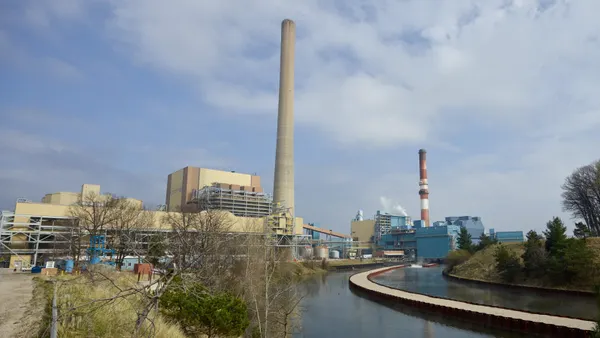
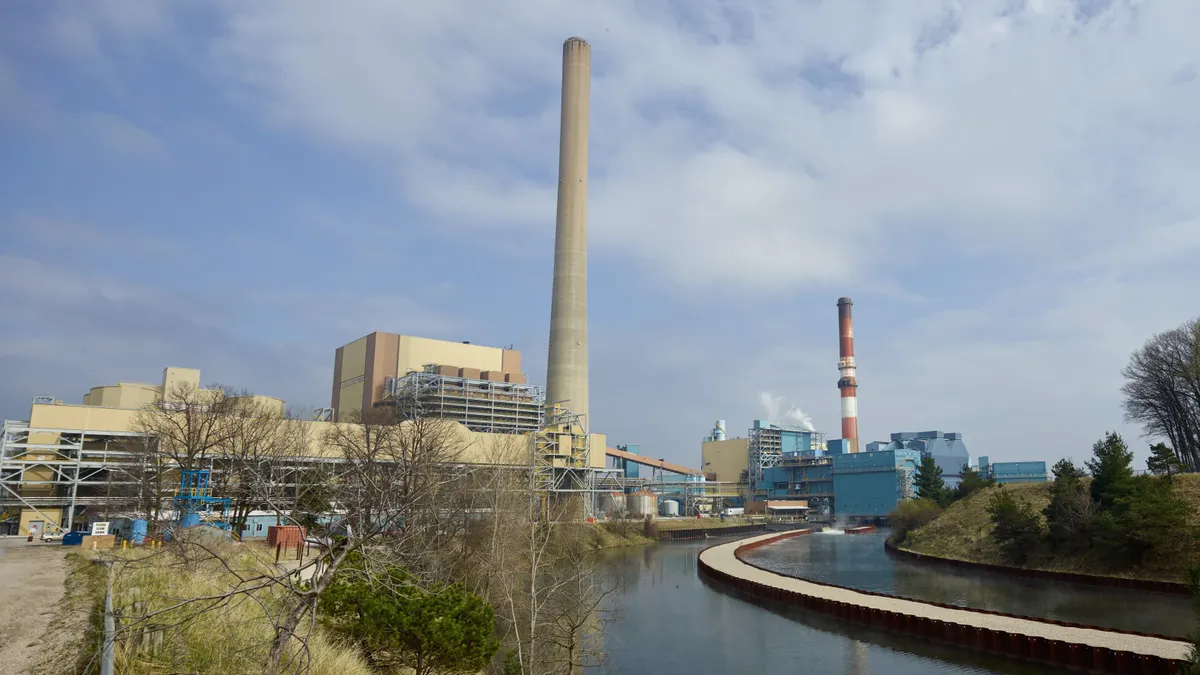
- The U.S. Department of Energy on Friday issued a seventh emergency 202(c) order under the Federal Power Act directing the Midcontinent Independent System Operator and plant majority owner Consumers Energy to keep the coal-fired J.H. Campbell plant in West Olive, Michigan, online past its planned retirement.
- The order follows a September federal appeals court decision vacating a previous emergency order to keep Campbell running on the grounds that DOE usurped state authority over generating resources.
- The Trump administration’s request for rehearing of that decision is still pending before the D.C. Circuit Court of Appeals. The Environmental Law & Policy Center and other consumer and environmental advocates say they are “evaluating all legal options related to the latest order.”
Dive Insight:
Utility Dive reported in June that Campbell was operating at a capacity factor of 46.1%, down from a nearly 66% average in the same periods in the previous four years.
Environmental and consumer advocates say there is no energy emergency requiring the plant to remain online, and forcing it to stay active has already saddled consumers with excess costs.
Consumers spent $303 million through the end of September to operate the plant under DOE emergency orders after accounting for $344 million in market revenues, according to its quarterly filing.
Consumers spokesperson Brian Wheeler said the utility “will continue to follow the law and operate our Campbell plant,” and that “consistent with these emergency orders, we will work to ensure that everyone who benefits from power from the Campbell plant across the Midwest pays their fair share.”
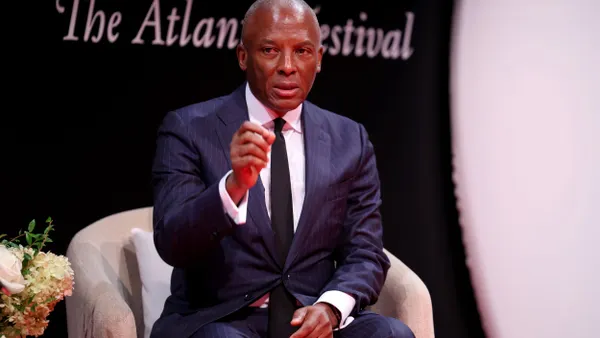
“Someone will be left holding the financial bag,” ELPC CEO Howard Learner said in a statement. And following the appeals court decision, the “latest purported emergency order is likewise illegal.”
“DOE should just stop issuing these orders and stop the meter from running up costs,” he said.
DOE did not immediately respond to questions about the new order and what may happen next.
The latest order will keep the 1,420-MW plant online another 90 days, until mid-February, bringing the total extension to more than 20 months, according to the Environmental Defense Fund.
Meanwhile, Consumers is seeking to recover “ballooning costs” from ratepayers in 11 states, EDF said: Illinois, Indiana, Iowa, Kentucky, Michigan, Minnesota, Missouri, Montana, North Dakota, South Dakota and Wisconsin.
Campbell “illustrates the enormous price tag attached to keeping these uneconomic coal plants on life support for months on end,” Ted Kelly, EDF director and lead counsel for U.S. clean energy, said in a statement. “These are completely unnecessary costs, yet families and businesses that are already stretched thin are being asked to foot the bill.”
According to DOE, coal plants across the U.S. “are being saved from premature retirement,” and in 2025 more than 17 GW of coal-fired electricity generation was preserved.
The J.H. Campbell power plant had been set to retire in May 2025. Ensuring Campbell and other coal plants are available to operate “has prevented blackouts and likely saved lives,” Energy Secretary Chris Wright said in DOE’s latest announcement.
The emergency conditions that led to the issuance of the original order persist, the agency said, and a joint report from the Federal Energy Regulatory Commission, the North American Electric Reliability Corporation and NERC’s Regional Entities “highlights how events that occurred during the Winter 2026 Arctic Cold Period, including Winter Storm Fern, demonstrated the need for dispatchable generation capacity from facilities like the Campbell Plant.”
According to EDF, since May 2025 the Trump administration has “repeatedly extended emergency orders to keep six coal plants online beyond retirement, even as those plants have racked up around $600 million in losses.”
“Of the unlawfully extended coal plants, the Campbell plant in Michigan has emitted the most health-harming air pollution,” it added.
According to the Michigan League of Conservation Voters, DOE’s latest order to keep Campbell open “will eat away at more than half of the $600 million the plant’s closure was set to save Michiganders by 2040.”
Consumers in Michigan “deserve affordable energy and relief from rising costs — not executive overreach that forces families to subsidize aging, expensive fossil fuel infrastructure,” Bentley Johnson, federal government affairs director for Michigan LCV, said in a statement.