The Federal Energy Regulatory Commission on Thursday rejected a complaint by RWE Clean Energy that argued the PJM Interconnection violated its network upgrade cost allocation rules for generators seeking to connect to the grid.
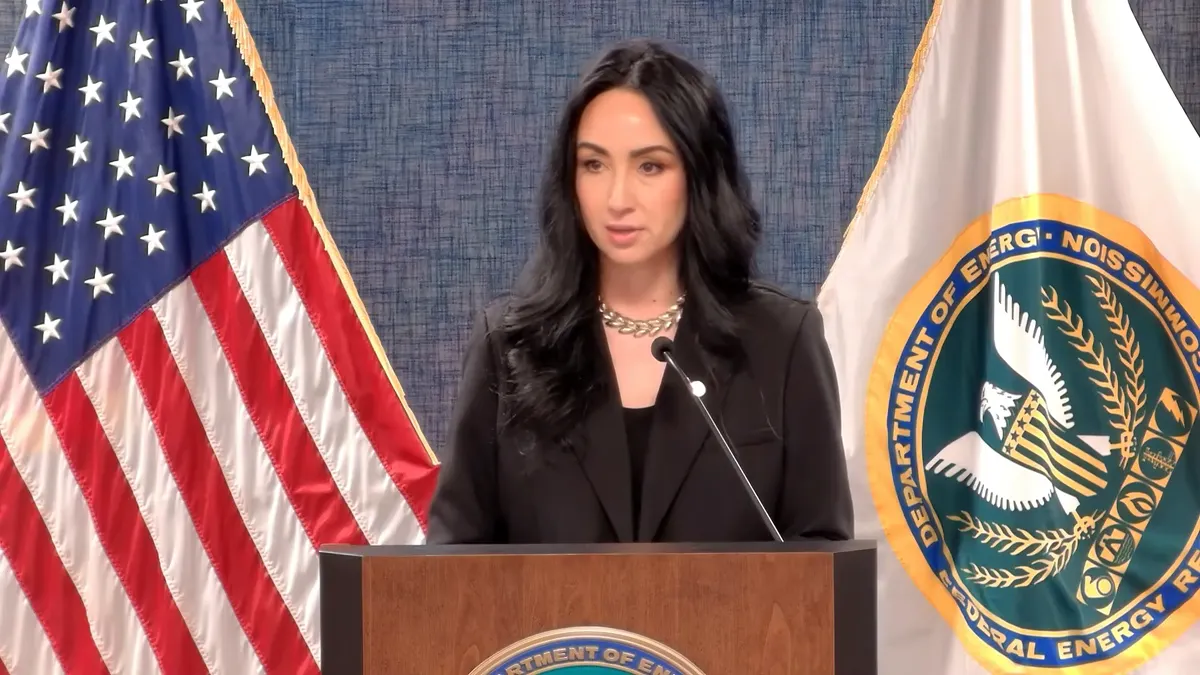
Although FERC dismissed RWE’s complaint, “the facts of the proceeding raise big picture concerns for how we will develop much needed generation to meet historic load growth,” FERC Chairman Laura Swett said Thursday during the agency’s monthly meeting. “The developer in this case spent significant time and capital to advance their project through several rounds of interconnection studies, only to discover significant unexpected network upgrade costs.”
Initially, PJM estimated RWE’s network upgrade costs for a 125-MW solar and battery project in Maryland would cost $1.25 million, but later revised the cost to nearly $72 million, according to RWE’s complaint. As a result, the company withdrew the project from PJM’s interconnection queue.
FERC ruled that RWE failed to show that PJM violated its rules. However, the commission said the dispute highlighted the interconnection-related cost uncertainties developers face.
FERC said some U.S. grid operators are considering revising their generator interconnection and transmission planning processes in ways that may lead to increased certainty around final interconnection costs.
The commission also noted that the PJM board directed PJM staff to review incentives for generation development in its footprint in a broad effort to ensure the grid operator has adequate power supplies.
“We encourage PJM to consider whether there are regionally appropriate reforms that could reduce interconnection cost uncertainty and expedite the interconnection process in PJM,” FERC said.
FERC commissioners David Rosner and Judy Chang said in a concurring statement that the dispute exemplifies how the interconnection process can make developers guess at finding low-cost interconnection points on the grid.
“Although the band AC/DC once sang ‘a shot in the dark, make[s] you feel alright,’ reading the facts of this complaint felt more like being ‘on the highway to hell,’” they said.
Rosner and Chang pointed to the Southwest Power Pool’s just-approved consolidated planning process, which merged transmission planning and interconnection study processes, as a “better way.”
The new process should sharply cut interconnection queue timelines by determining how much generators need to pay to access SPP’s transmission system before they start the interconnection process, according to Swett.
That will help reduce speculative interconnection requests and get generation on the grid faster, she said.
“Every other market should take a hard look at what they can learn from SPP’s leadership in solving the issues the entire country faces,” Swett said.
Lower ROE in New England
At the meeting, FERC voted to cut the base return on equity it gives to transmission owners in New England to 9.57% from 10.57%. Including incentives, their total ROE cannot exceed 12.09%, the agency said.
The decision resolves four complaints over the ROE for New England transmission owners. The first complaint was filed in 2011. An appeals court in 2017 vacated FERC’s initial decision on the first three complaints. The New England cases were also affected by separate litigation over the ROE for the Midcontinent Independent System Operator transmission owners.
In its Thursday decision, FERC ordered the transmission owners to issue refunds for the 15-month period, from Oct. 1, 2011, to Dec. 31, 2012, related to the first complaint proceeding. The agency didn’t order refunds for the second or third complaint, saying that would effectively extend the refund period in the first complaint proceeding beyond a statutory 15-month limit. FERC also declined to order refunds for the fourth complaint.
FERC’s order “carefully and thoughtfully balances affordability for consumers with the need for regulated industries to attract the capital that they need to build out needed energy infrastructure,” FERC Commissioner David Rosner said.
The decision drew criticism from the affected utilities and some analysts, however.
The length of time it took to resolve the complaints is a case of “regulatory malpractice,” Paul Patterson, a Glenrock Associates equity analyst, said in an interview.
Utility companies affected by the decision to cut transmission ROE include Avangrid, Eversource Energy, National Grid and PPL Corp.
For Eversource, for example, a percentage point reduction in its current ROE would cut its after-tax earnings by about $70 million a year, with the reduction increasing “slightly over time as we continue to invest in our transmission infrastructure,” the Springfield, Massachusetts-based utility company said in its annual report filed on Feb. 17 at the U.S. Securities and Exchange Commission.
FERC’s decision “departs from the statutory limitations imposed by the Federal Power Act and long-standing judicial precedent requiring FERC to set rates of return sufficient to attract the capital needed for essential utility investment,” Eversource said in a statement.
FERC’s lack of action after the U.S. Court of Appeals for the District of Columbia Circuit vacated the agency’s orders in the case in 2017 hurt investor confidence, according to Eversource.
FERC’s decision “further undermines utilities’ ability to secure the capital needed to maintain safe operations and top-tier reliability for customers,” the company said.
Eversource said it will coordinate with other New England transmission owners on next steps, “including a plan for appeal.”
Cost share for DOE ‘emergency’ orders approved
FERC said it would allow two Indiana utilities to recover their costs related to Department of Energy directives ordering the companies to keep coal-fired power plants running that they had planned to retire.
Those costs can be shared across the Midcontinent Independent System Operator’s northern and central regions, according to FERC. The decisions affect power plants owned by Northern Indiana Public Service Co., a division of NiSource, and Southern Indiana Gas and Electric Co., part of CenterPoint Energy.
Under the Federal Power Act, FERC must determine a fair and reasonable allocation of the costs stemming from the DOE’s 202(c) orders, Swett said during a media briefing.
“We have to look at the specific facts and law of that docket, including the market and the ratepayer impact,” Swett said. “And when we issue an order, it is with confidence that we have adjudicated those costs and allocated them as fairly as possible.”
Large load reliability standards on horizon
During FERC’s meeting, Chang highlighted a report issued this month by the North American Electric Reliability Corp.’s large load task force, which recommends that data centers and other large loads be required to register with NERC.
“This will, of course, then start obligating large loads to adhere to reliability standards,” Chang said. “And by registering these large loads and applying reliability standards, NERC can ensure that the interconnection of these large loads does not negatively impact the reliability of the bulk power system.”
Market rules should allow data centers and other large loads to be able to shift their daily operations in response to wholesale power prices, she said.
“I feel like 2026 has got to be the year of load flexibility,” she added.
Cyber standards approved
At its meeting, FERC also approved updates to NERC cybersecurity standards.
One rule approves 11 updated Critical Infrastructure Protection reliability standards that enable secure use of virtualization technologies.
“These enhancements give entities greater flexibility to adopt efficient, modern tools that reduce hardware needs and strengthen cyber defenses across the bulk power system,” FERC said in a statement.
FERC also approved changes to improve baseline cybersecurity for low-impact bulk electric system cyber systems. The rule aims to cut the risk of coordinated cyber attacks that target distributed, externally routable assets, NERC said in a statement.