The U.S. Department of Energy plans to offer $1.9 billion to help fund 31 grid-improvement projects that are expected to add 23 GW of capacity to the transmission system, it said Thursday.
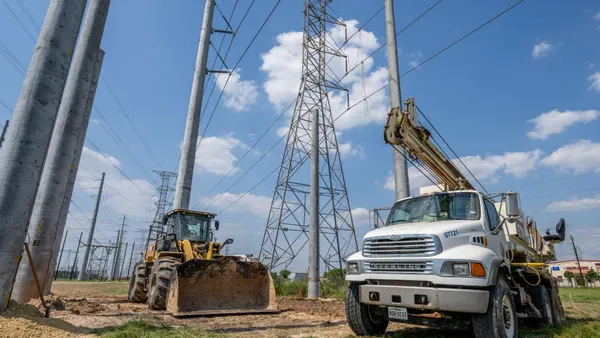
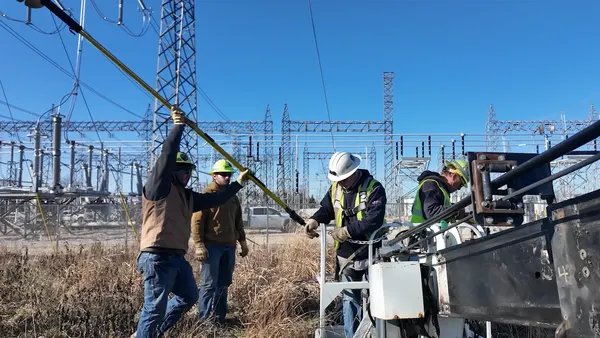
DOE expects the project sponsors will reconductor or rebuild more than 1,500 miles of transmission lines and add grid-enhancing technologies across nearly 21,000 miles of transmission lines.
The funding from DOE’s Speed to Power through Accelerated Reconductoring and other Key Advanced Transmission Technology Upgrades, or SPARK, program was enabled by the Infrastructure Investment and Jobs Act.
“These selected SPARK projects put advanced transmission technologies to work, modernizing critical infrastructure, maximizing the capacity of existing lines, and unlocking more than 20 GW of additional grid capacity,” DOE Office of Electricity Assistant Secretary Catherine Jereza said in a press release.
Instead of building new transmission corridors, which can take decades, using advanced grid technologies will deliver “massive” grid upgrades in “record time,” DOE said.
“By maximizing existing rights-of-way, the selected projects will eliminate congestion bottlenecks and avoid expensive greenfield construction — lowering operating costs to help reduce consumer electricity bills,” the department said.
In total, DOE expects project sponsors will contribute about $3.4 billion for the planned infrastructure, bringing the total spending to $5.3 billion.
The project selections grew out of a mid-March DOE solicitation that focused on grid resilience, smart grid and grid innovation programs.
Utilities DOE selected for funding include Alabama Power, Duke Energy Carolinas, Eversource Energy, Kit Carson Electric Cooperative and PPL Electric, according to a summary of the selected projects.
At least two planned projects are designed to bolster transmission links between the Eastern and Western interconnections, which currently have a limited capacity to exchange electricity.
The Colorado Energy Office is sponsoring a $1.2 billion project that would deploy advanced transmission technologies to “expand interregional transfer capability, improve system reliability, enhance operational flexibility, and strengthen grid resilience across Colorado, Texas, and neighboring regions,” according to DOE’s project summary.
And the Oklahoma Office of Management and Enterprise Services is spearheading the $832 million “Three Corners Connection” project, which aims to create a high‑capacity link between the Southwest Power Pool in Oklahoma and the Western Electricity Coordinating Council in Colorado, according to the summary.