Brian Fellon is senior vice president at Xpansiv, a market platform for energy and environmental commodities.
Winter Storm Fern hit Texas in January 2026 with extreme cold and hazardous precipitation. But unlike Winter Storm Uri in 2021, the lights stayed on. The Electric Reliability Council of Texas’ post-event report captured how the grid remained intact without Energy Emergency Alerts, public conservation calls or systemwide outages.

During Fern, ERCOT’s battery energy storage resources were indispensable for covering peak-demand reserves, while all resource types contributed to meeting broader system demand. The critical lesson is that grid performance is highly dependent on coordinating nascent technologies and real-time operations with legacy generation assets. That lesson is now being tested at scale across the country.
The U.S. electricity sector is undergoing its most abrupt transformation since deregulation. After nearly two decades of flat demand, load growth is accelerating from data centers, transportation and industrial electrification.
The forward demand curve has never been this steep, and ERCOT's long-range planning assumptions contemplate peak load reaching more than four times today’s record levels. Across the PJM Interconnection footprint, forecasted load growth is raising expectations that tens of gigawatts of new supply may be needed over the coming decade to maintain system reliability.
This demand jump is colliding with aging grid infrastructure, constrained transmission, record-long interconnection queues and a shifting policy landscape. These factors are reconfiguring wholesale power markets and revaluing baseload and dispatchable generation, while establishing battery storage as essential grid infrastructure.
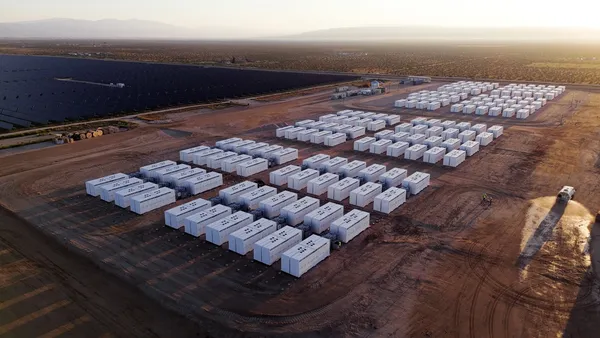
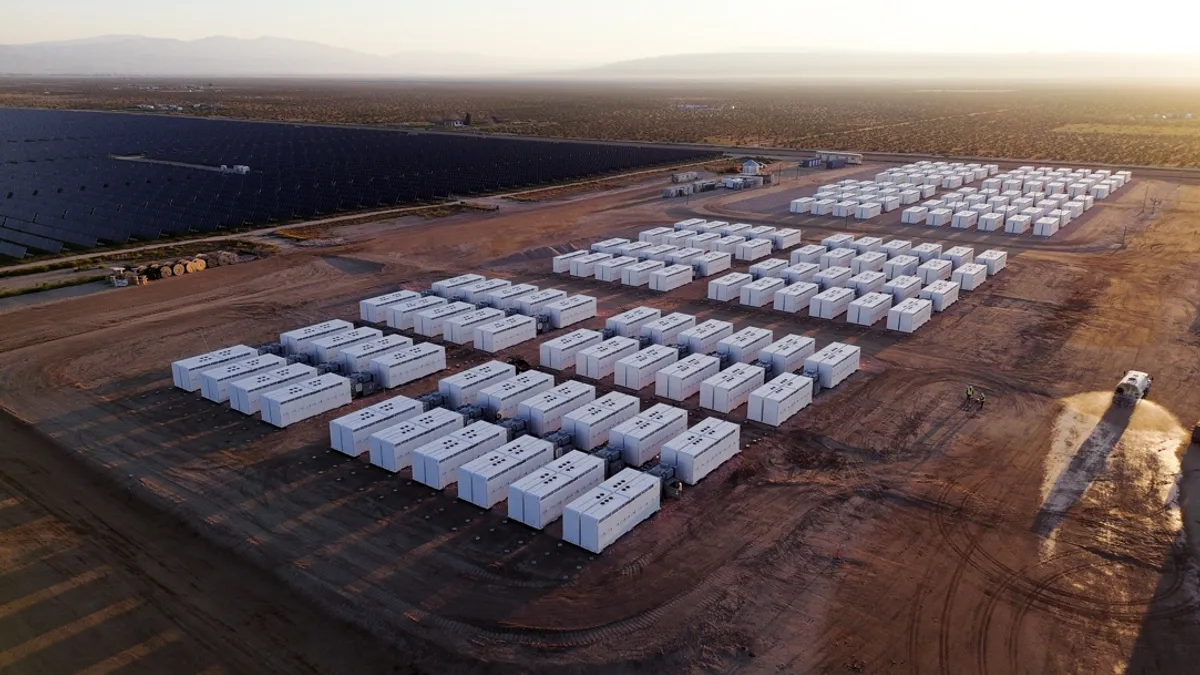
Batteries are often described as a foundational solution because they respond instantly, start and stop without thermal plants’ mechanical constraints, and uniquely shift energy from off-peak to on-peak periods. In practice, the grid does not simply benefit from batteries as fixed capacity in the conventional sense. It benefits from dynamic, flexible battery storage systems that are specifically configured to accelerate responsiveness, along with the telemetry, data feeds, market interfaces and 24/7 readiness required to perform under normal and stressed conditions alike.
That distinction matters as storage scales, owners compete for arbitrage opportunities and electricity markets evolve.
In organized wholesale markets, dispatch is not a single daily event. It’s a sequence of day-ahead scheduling, intraday adjustments and real-time dispatch, translated into 5-minute price intervals. For chemically-constrained assets like batteries, timelines are crucial because spot market decisions are inseparable from current and future state-of-charge, known as SoC. Every megawatt discharged at a given time affects what can be delivered later.
Fortunately, policy and market design are adapting to support this reality. FERC’s Order No. 841 requires ISOs/RTOs to remove barriers to storage participation and adopt participation models that recognize storage’s physical and operational characteristics. That mandate expanded the range of products storage can provide, with more options for revenue production.
Although not governed by FERC, ERCOT went even further than Order 841. In December 2025, ERCOT implemented Real-Time Co-optimization Plus Batteries (RTC+B), which co-optimizes energy and reserves in real time while accounting for what battery resources can actually deliver. One month later, during Winter Storm Fern, ERCOT credited RTC+B with helping redistribute ancillary services across the system during a localized transmission emergency. The same change that helped ERCOT lean on batteries during Fern also changed how those batteries earn revenue. As these rules open new ways for storage to participate, the mix of market products that pay off keeps shifting.
The new paradigm, and what’s needed
Market participants and grid operators need timely, accurate information about what a battery can deliver under variable constraints. Unreliable data or inconsistent operations aren’t theoretical problems, because they show up directly in project economics after commercial operations begin.
Similarly, optimization only creates value if it’s converted into timely, accurate and compliant market submissions. There has never been a greater need for validated bid and offer workflows, automated checks against asset constraints and market rules, reliable ISO/RTO connectivity, clear audit trails, and the ability to rapidly adjust trades as forecasts, prices, outages and SoC conditions change.
The same need for accuracy and coordination extends into real-time operations. Wholesale markets and grid conditions don’t simply pause at 5 p.m. when the workday ends for most electricity consumers. Scarcity pricing, forced outages and weather disruptions often happen during off-hours. Sophisticated storage operators utilize defined escalation pathways, telemetry monitoring and situational awareness tools to coordinate instantly when grid conditions require immediate support. A practical checklist for battery owners and operators includes:
- Treat data and telemetry as mission-critical infrastructure. Validate data quality and latency end-to-end, not just at the device level.
- Run multi-market playbooks, not single-product strategies. Markets change; build the adaptive capability to shift with them.
- Treat market submission as a core operating capability. Whether built in-house or outsourced, deploy resilient controls, versioned workflows and exception handling.
- Operationalize SoC discipline. Establish SoC guardrails tied to existing obligations, revenue targets and forecast uncertainty. Review after-action performance during unforeseen events.
ERCOT has shown what adaptive market design can deliver. Other markets should follow.
Operators can only do so much on their own. Market rules decide how much value flexible resources can actually deliver, and those rules are only as good as a market's culture and willingness to keep improving them.
ERCOT treats market design as ongoing work. When storage grew from a niche resource to a core part of the fleet, the rules were changed to match it. When large-load requests began reshaping the interconnection picture, regulators moved promptly to change how those loads are studied, prioritized and approved. Not every change has been perfect, and some have been contentious. But the gap between identifying a problem and putting a fix in place has been relatively short.
Other grid regulators could benefit by adapting this model to their regions, while avoiding preconceptions that this can only work in Texas. Much of the country runs on a slower cycle, where reforms move through multi-year stakeholder processes, compliance filings and phased implementations.
Implementation has also diverged enough that an operator running assets in three markets is effectively running three separate businesses. Closer alignment on state-of-charge accounting, telemetry requirements and bid formats would lower the cost of entry for smaller operators and reduce operational congestion for everyone.
ERCOT's design doesn't need to be copied everywhere, but its pace of innovation should be. Regions that move from a problem to a fix in months (not years) will attract investment and maintain the reliability that others will eventually fight for.
The era of static demand is over; as the grid is being rewired, success will favor those who are prepared to execute in real time.