Dive Brief:
- Bank of America analysts forecast the United States will need more than 230 GW of new generating capacity over the next five years, but regulated utilities are expected to add only about 93 GW of accredited supply, leaving a gap of more than 100 GW.
- Data centers alone could add roughly 125 GW of U.S. electric load over the period, pushing overall electricity demand growth to a 4.1% compound annual growth rate from 2026 through 2030, according to the report.
- With large gas turbines largely sold out through 2030, data center developers are increasingly likely to turn to on-site gas engines while utilities extend coal plant operations, deploy batteries and pursue transmission upgrades, BofA analysts said.
Dive Insight:
The report's forecast comes largely from BofA's semiconductor analysts, whose projections for rapid deployment of AI computing infrastructure, including specialized chips and servers, underpin the firm's outlook for a widening U.S. electricity supply gap.
The analysts also note that utilities have revised demand forecasts upward in each of the past three years as AI-related electricity demand has materialized faster than expected.
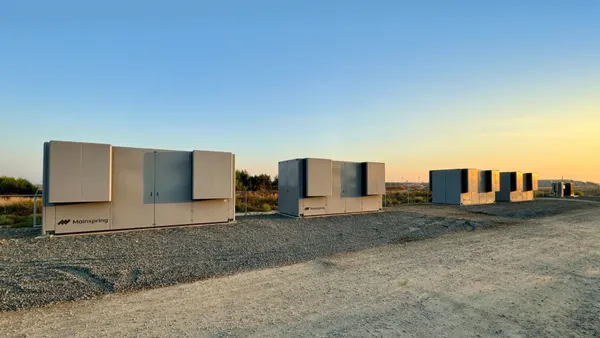
As utilities struggle to bring new capacity online quickly enough, BofA expects more data center developers to turn to behind-the-meter generation. More than 7.5 GW of data center projects with on-site generation are already under construction, with another 60 GW-plus in pre-construction, according to the report. Rather than operating entirely off grid, these facilities are expected to combine self-generation with traditional grid connections to improve reliability and shorten project timelines.
AI infrastructure is reshaping long-term electricity demand after a decade of largely flat consumption growth driven by efficiency improvements, LED adoption and distributed solar generation. The analysts said planned generation additions may overstate available supply because intermittent resources such as wind and solar contribute less accredited capacity during peak demand than their nameplate ratings suggest. As a result, firm resources will remain essential even as renewable generation expands.
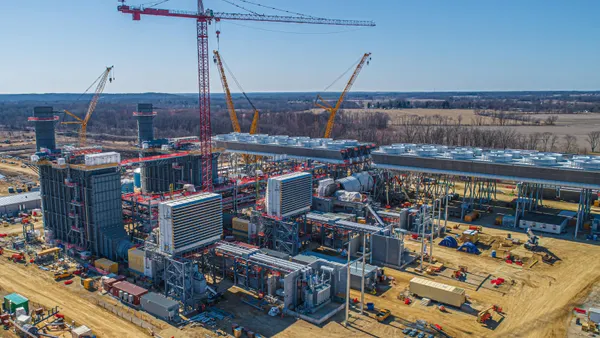
Natural gas is expected to play a central role in meeting new demand, but equipment availability is a constraint. Large gas turbines remain the preferred technology for flexible power, yet manufacturing capacity is largely committed through 2030 and new units can take years to enter service after shipment. That has increased interest in natural gas reciprocating engines, which can be deployed more quickly and respond rapidly to changing loads. Manufacturers including Caterpillar, INNIO, Rolls-Royce and Wärtsilä have expanded production to meet rising demand, the analysts said.
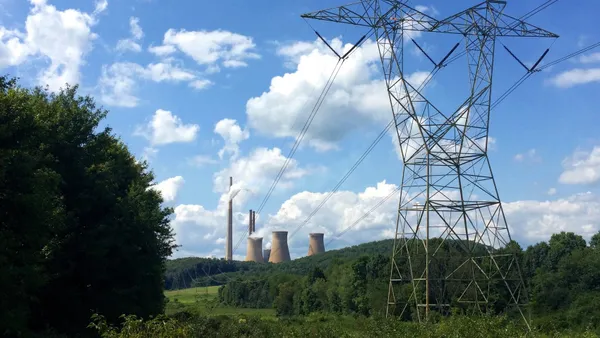
Utilities and regulators are also increasingly keeping existing generating assets online longer to preserve reliability, according to the report. It identifies coal plants across Maryland, Wisconsin, Indiana, Utah, Kansas, Nebraska and Mississippi that have had retirement dates delayed or canceled to preserve dispatchable capacity.
Battery storage, transmission expansion and regulatory changes that increase utilization of existing generating assets could also help address reliability challenges, although the analysts caution that transmission projects often take years to permit and build. They cite the Champlain Hudson Power Express, which took 16 years from planning to energization, as an example of the development timelines facing new infrastructure.
The concentration of AI-driven data center growth in the U.S. is prompting utilities and regulators to address how to connect large new loads and allocate the cost of new infrastructure. Higher power prices could drive some demand destruction among customers and energy-intensive industries, but academic research suggests electricity demand is relatively inelastic in the short to medium term. A 10% increase in real electricity prices typically results in a 1% to 2% decline in consumption.
“The market is no longer constrained by demand — it is constrained by where power can actually be delivered,” said BofA analysts in their Global Research Report.